46 Percent: The Independent Threshold for GOP Victory
Polls suggest Republicans must capture nearly half of independents to win Congress, while Democrats fight to keep young voters and Black turnout high in key states.
By Hassan Bello ·
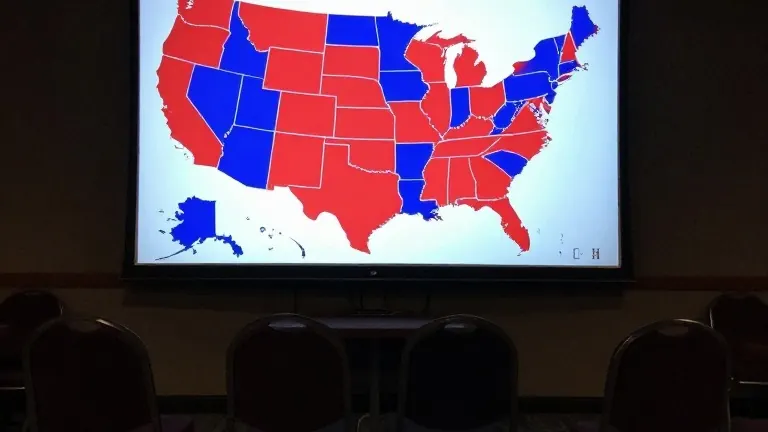
Election night hinges on a specific mathematical threshold: 46 percent. For the past decade, Republican candidates have secured their victories only when they captured at least 46 percent of independent voters. In 2012, Mitt Romney won 55 percent of that group but lost the presidency, yet the political landscape has shifted. Since Donald Trump’s rise, blue-collar white voters have trended toward Republicans, while better-educated white voters have moved toward Democrats. If Republicans fall short of that 46 percent mark, they have consistently lost.
Early results will reveal if this threshold holds. Indiana and Kentucky report results as early as 6 p.m. ET, with Florida following soon after. Watch Indiana’s 5th and Kentucky’s 6th congressional districts. Both are held by Republicans but are more competitive than expected. If these races go to Democrats, it signals low Republican turnout. Florida’s 22nd and 27th districts offer further clues. The 22nd is redrawn to favor Republicans, while the 27th is heavily Latino. Trump won that district by double digits in 2024, making it a key indicator for how that demographic votes this cycle.
In Michigan, the Senate race turns on Black voter turnout in Wayne County. Democrat Abdul El-Sayed needs 68 percent of that county’s vote to win, unless he performs exceptionally well in the suburbs. In 2024, Sen. Elissa Slotkin won with only 63 percent, a margin that allowed her to carry the state. If El-Sayed cannot match that performance in Detroit’s core, his path to victory becomes significantly steeper.
Young voters aged 18 to 29 remain a decisive factor for Democrats. Their turnout drops from 43 percent in presidential years to 21 percent in midterms. Historically, when Democrats win this group by more than 20 points, they take the presidency or make major House gains. The exception was 2022, where a 28-point Democratic margin helped stem a larger Republican wave, resulting in a net loss of only nine House seats for Democrats.
Texas offers a complex picture. Democrat James Talarico leads in polling averages, but past errors in the state have underestimated the Republican vote. To win, Talarico must outperform Beto O'Rourke’s 2018 numbers. O'Rourke captured 64 percent of Latino voters, who made up 26 percent of the electorate. Talarico must beat those figures in key counties like Cameron, Hidalgo, and Webb. Additionally, the vote difference between Republican candidates Greg Abbott and Ken Paxton will matter. In 2018, Ted Cruz won despite trailing Abbott by 400,000 votes. If that gap repeats, Talarico faces an uphill battle.
Finally, party identification has shifted dramatically. Only 31 percent of voters identified as Democrats in 2024, down from 39 percent in 2008. This decline reflects a more liberal base that is often disaffected with its leadership. However, opposition to Trump is strong, with 53 percent of likely voters strongly disapproving of his job performance. This opposition may unify the left, making races in purple areas like Michigan’s 7th District critical tests of Democratic cohesion.
Source: WUWF