Flooded EVs May Ignite Weeks Later
NFPA advises owners to treat submerged electric vehicles as accidents, citing saltwater corrosion risks that cause delayed fires.
By Hassan Bello ·
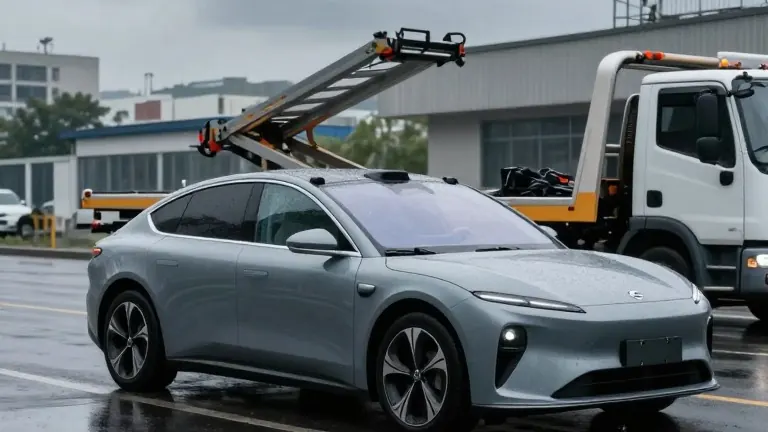
Electric vehicles that sit in saltwater during coastal flooding can catch fire hours, days, or even weeks after the water recedes. The National Fire Protection Association issued this warning to residents in southern Florida, where high tides and storm surges regularly push saltwater into low-lying streets and parking lots. The risk persists because saltwater penetrates the high-voltage battery packs of electric cars. This infiltration creates conductive paths inside the battery system that can trigger short circuits. Salt also accelerates corrosion within the components. In some cases, these internal changes lead to thermal runaway. This condition causes the battery to heat uncontrollably, releasing gases and potentially igniting a fire or causing an explosion.
The danger is difficult to spot because a flooded car often looks normal once the water is gone. Owners might assume the vehicle is safe if it starts up and drives away. The NFPA notes that there is no specific time frame for when a reaction might occur. A car that appears fine on Tuesday could catch fire three weeks later. This delay makes visual inspection unreliable. The association advises treating any submerged electric vehicle the same way one treats a car that has been in a serious accident. Drivers should not enter the vehicle, attempt to start it, or try to drive it. The car should be moved by a tow truck.
Once the vehicle is secured, placement matters. The NFPA recommends keeping a submerged electric car at least 50 feet away from other vehicles or combustible objects. Owners should avoid storing these cars in covered spaces like garages. If the car must stay outside, it needs distance from structures. This spacing helps contain a potential fire if thermal runaway begins. The goal is to prevent one battery fire from spreading to nearby property or other cars.
Owners should watch for specific warning signs if their vehicle has been exposed to floodwaters. The NFPA lists hissing or clicking sounds as primary indicators. Bubbling or gurgling noises also signal potential internal damage. Unusual odors coming from the vehicle require immediate attention. Visible smoke is the most obvious sign that a problem has developed. If any of these symptoms appear, the NFPA recommends calling the local fire department to investigate. Do not attempt to diagnose the issue yourself. The fire department can assess the battery’s condition and determine if the car needs to be moved further away.
Prevention remains the best strategy. If coastal flooding is predicted, move electric vehicles out of susceptible areas before the water rises. The NFPA also advises all drivers, not just those with electric cars, to avoid driving through flooded roads. In southern Florida, this is particularly important in low-lying zones that experience coastal flooding during exceptionally high tides. These areas are prone to pooling saltwater that can soak into vehicle undercarriages and battery housings.
Recent data from Hurricane Ian illustrates the scale of the issue. A study by the National Highway Traffic Safety Administration found that between 3,000 and 5,000 electric vehicles were affected by saltwater immersion during that storm. Of that total, 600 vehicles were declared total losses. Another 36 vehicles caught fire. While the NFPA notes that less than 1% of the exposed vehicles burned, the consequences of those fires are severe. Putting out a lithium-ion battery fire is complex and requires specialized equipment. The heat can spread to adjacent cells, making the fire harder to control than a traditional gasoline engine fire.
The experience during Hurricane Ian showed why the interaction between saltwater and electric batteries requires serious attention. The physical damage caused by the salt does not disappear when the water level drops. The chemical reactions continue inside the sealed battery pack. This means the risk remains active long after the storm has passed. Owners in coastal zones need to account for this hidden danger when assessing their vehicles after a flood event.
The core message for electric vehicle owners is simple. If the car was submerged, do not try to start it or drive it. Even if the vehicle appears undamaged, the salt and corrosion effects remain. Keep the car away from structures and other vehicles. If you notice smoke, strange smells, or unusual noises, move away and call emergency services. The water going down does not mean the risk is gone.
Source: WSCV