Ten dead after two high-speed trains collide in central Spain
Services between Madrid and Seville are halted as officials assess the damage to derailed carriages.
By Hassan Bello ·
Rail travel through the heart of Spain came to a sudden stop on Wednesday morning. Two high-speed trains collided on the line connecting Madrid to the southern region of Andalucía, leaving at least ten people dead.
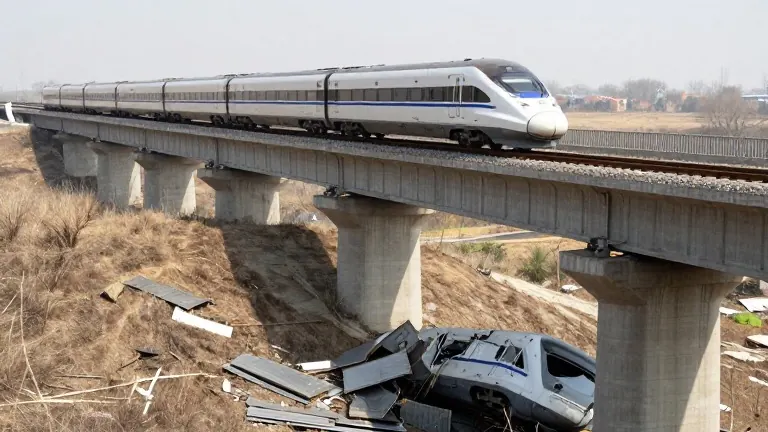
The state rail infrastructure authority, Adif, suspended services between Madrid and Seville following the rear-end collision. Initial reports indicate that one train struck the back of another service. The impact knocked two carriages off the track.
Esther Padilla, a spokesperson for the Castilla-La Mancha regional government, confirmed the death toll to local media. She described the early information as poor and warned that the number of fatalities could rise. Authorities are currently working to determine the full extent of the injuries.
Footage from regional television showed the aftermath on an elevated section of track. One carriage remained on the rails, while twisted metal and broken panels littered the embankment below. The rail operator identified the crash site as being on the Madrid to Seville route.
Manuel Galán, the mayor of the nearby town of Urda, said emergency services asked him to prepare a local sports hall. The facility will serve as a temporary shelter for injured passengers. Officials are coordinating care for those affected by the accident.
Prime Minister Pedro Sánchez expressed shock in a post on X. He stated he is in constant contact with the transport minister and the regional president. Emergency teams are on the ground assisting victims and ensuring their safety in coordination with local administrations.
Political leaders from both the ruling and opposition parties paused their campaign activities for the day. The general election is scheduled for next month. Alberto Núñez Feijóo, leader of the People's Party, said the priority is attending to the victims and supporting their families.
Source: The Guardian