Data Center Health Concerns Split Midterm Races
New research on air pollution and noise has turned proposed data centers into a key issue for candidates in Arizona, Ohio, and Texas.
By Elena Menon ·
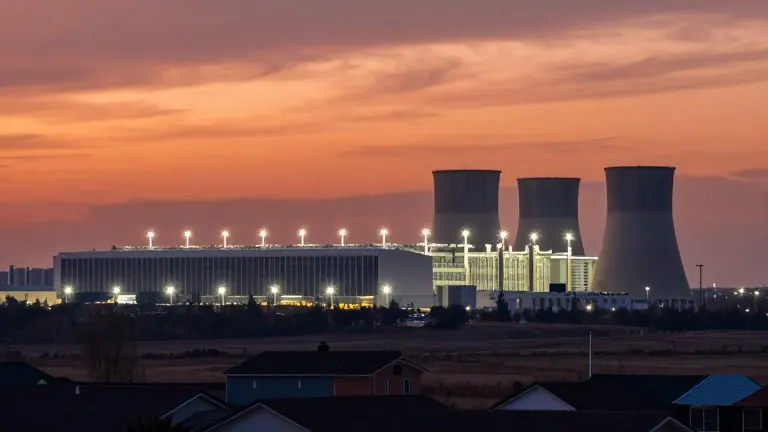
The rapid expansion of data centers is creating a new political fault line as the United States approaches the November 3 midterm elections. Voters in several states are weighing the economic benefits of these facilities against emerging evidence that they may pose health risks. This shift is forcing candidates in traditionally conservative states to rethink their positions on infrastructure projects.
In Page, Arizona, a town of approximately 7,000 people, residents are opposing a proposed $10 billion data center. The city council approved the sale of 500 acres of land for the project, but the developer still requires zoning and other local approvals. Doug Herrera, 64, lives near the proposed site and worries about the impact on his health. He cited light pollution, sound levels, and rising temperatures as primary concerns.
"I’m a patriot, but I’m highly against the data center," Herrera said. "There is light pollution, sound pollution. The temperature is going to rise." Residents in Page have mobilized against the project, with yard signs reading "No Data Centers" visible throughout the community. In July, local voters removed the mayor from office amid backlash over the council's decision to sell the land.
Political scientists note that data centers are often built in rural areas where Republican candidates have historically enjoyed large margins of support. Lee Hannah, a political science professor at Wright State University in Dayton, Ohio, said that early decisions to support these projects are now becoming political liabilities. "That opposition has come up in a grassroots way so quickly that decisions made a year ago by local officials or state governments to get behind a data center are suddenly career-ending," Hannah said.
Research indicates that emissions from gas turbines and diesel generators used by data centers can contribute to heart conditions, respiratory issues, and cancer risks. A modeling study led by researchers at the University of California-Riverside estimated that center emissions could cause nearly 1,300 deaths annually by 2030. The same model projected an annual public health burden of more than $20 billion by 2028. Cooling components may also contain synthetic chemicals that accumulate in human tissue.
In Ohio, more than a dozen local referendums related to data center construction will appear on ballots this year. The issue has become a central topic in the state's U.S. Senate race. Democratic candidate Sherrod Brown has attacked Republican incumbent Jon Husted, labeling him "the face of data centers" in television ads. Brown argued that the facilities are consuming local resources and farmland. A memo from the National Republican Senatorial Committee described the issue as a major challenge for Husted's campaign.
Husted has responded by framing the issue as a local decision. In a statement, his spokesperson Tom Evans said Husted believes data centers should remain a local decision while ensuring companies pay for infrastructure costs. An August poll by Noble Predictive Insights found that 57% of registered Arizona voters oppose the construction of more large data centers. A separate survey of Ohio adults by Ohio Northern University and SurveyUSA found that 55% were opposed to construction, with about two-thirds holding a negative view of the environmental impact.
Industry groups argue that existing regulations limit the environmental footprint of these facilities. Dan Diorio, executive vice president of state policy and government affairs at the Data Center Coalition, said a review of the Virginia market showed minimal use of backup power sources. "Data centers are committed to being responsible partners where they operate," Diorio said.
About 1,400 data centers currently operate in the United States, with an additional 2,000 planned. Sixty percent of the capacity under construction is located in states that President Donald Trump won by at least five percentage points in the 2024 election. A Washington Post-ABC News-Ipsos poll released in October found that two in three Americans oppose the construction of new data centers in the country.
Source: The San Diego Union-Tribune