Deer hunters face strict terminology rules
Distinguishing between antlers and horns, or classifying a young buck correctly, can mean the difference between sounding experienced and revealing a lack of knowledge.
By Elena Menon ·
The language of deer hunting relies on precise distinctions that separate novice hunters from experienced ones.
Bob Humphrey, a freelance writer and Registered Maine Guide based in Pownal, outlines the specific lexicon used in the sport. He notes that a male deer is a buck and a female is a doe. While the standard plurals are bucks and does, hunters in Pennsylvania often use the singular forms for both, a practice he attributes to no clear reason. This pattern of using the same word for singular and plural also applies to moose and elk, which are members of the same deer family.
Age categories require careful attention to avoid misidentification. A deer that is at least one year old but less than two is a yearling. Animals younger than one year are fawns, not yearlings or lambs. A term like lamb specifically refers to sheep. Buck fawns may display small hair tufts or leathery patches where antlers will eventually grow, earning them the nickname button bucks. Yearling bucks typically grow their first hard antlers. Those with single points are called spikes, spike bucks, or spike-horns. Antlers that split at the tip are known as fork-horns, crotch-horns, or forkies.
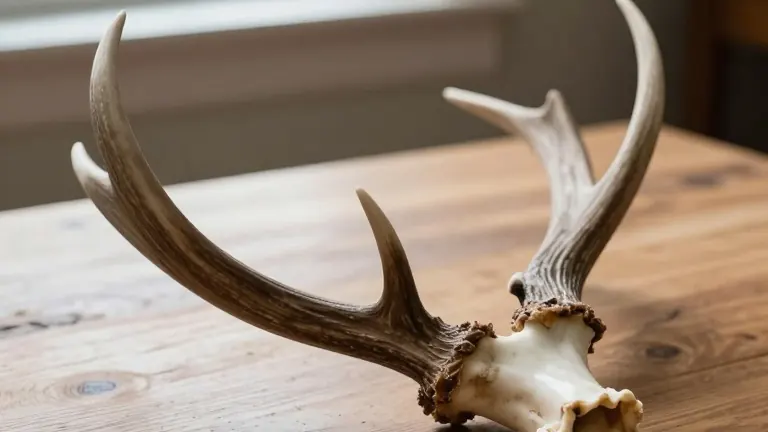
The structure of a mature antler, or rack, involves specific anatomical terms. A point, or tine, is a projection from the main beam or another point. The first two points near the base are brow tines or eye guards. Subsequent points are often labeled by scoring systems as G1, G2, and so on. Hunters debate what qualifies as a point. Some accept any projection at least one inch tall, while official scoring rules require the projection to be longer than its width where it meets the main beam. If a hunter does not submit the rack for official scoring, they determine which projections count.
Symmetry determines the classification of the rack. Most racks are symmetrical, featuring equal numbers and similar sizes of points on both sides. When asymmetry reaches a specific level, the rack is designated non-typical. A critical distinction exists between antlers and horns. Antlers fall off at maturity and regrow annually, whereas horns continue growing for the animal's life. Despite this biological difference, seasoned hunters frequently refer to antlers as horns, a usage that novices are advised not to correct.
Large bucks with substantial antlers receive a variety of informal names. Common attributions include staver, sad daddy, gray ghost, slammer, hammer, hat rack, and ole mossy horns. Humphrey advises hunters to familiarize themselves with these established terms rather than inventing new ones. Doing so helps avoid appearing inexperienced to those who know the sport.
Humphrey can be reached at his provided email address. He lives in Pownal, Maine.
Source: The Forecaster