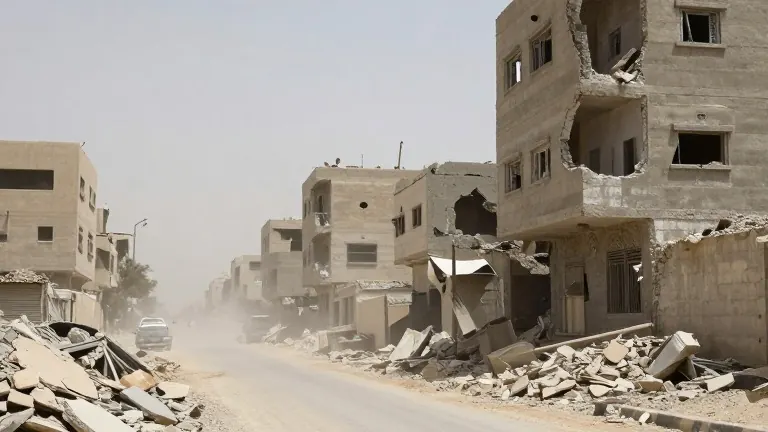
Aid Hub Struck as Kherson Truce Ends
Russian airstrikes killed 24 people in Zaporizhzhia while a cyberattack triggered false nuclear warnings across both nations.
By Elena Menon ·
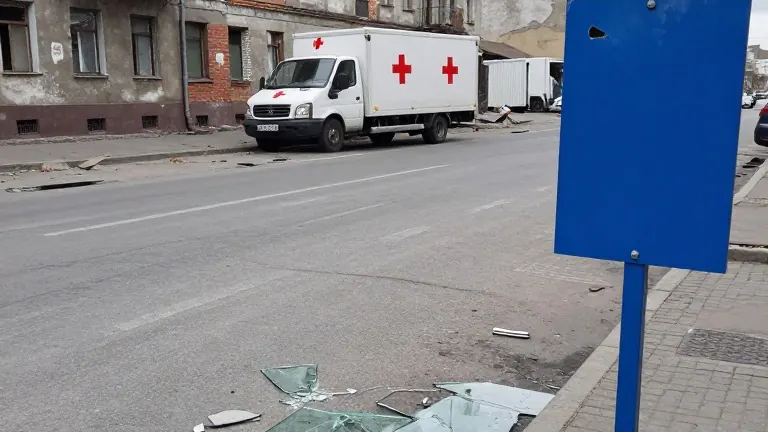
The war in Ukraine intensified on Monday with a dual front of conventional strikes and digital disruption. Russian forces targeted civilian infrastructure in the south while hackers compromised emergency alert systems in both Ukraine and Russia.
In the village of Komyshuvakha in the Zaporizhzhia region, Russian forces dropped 10 guided bombs on an area containing a school building used for humanitarian aid distribution and a neighboring shelter. Ukrainian emergency services reported that the strikes killed 24 people. President Volodymyr Zelenskyy posted on X that the attacks proved Russia sought no de-escalation. He stated that by carrying out these killings, Russia was counting on more deaths rather than showing progress toward peace.
The bombing occurred just as a limited ceasefire in the Kherson region expired. That temporary pause in fighting, which began on Oct. 27, had allowed for aid missions and evacuations in Russian-occupied Oleshky. It was the most substantial truce since the full-scale invasion began nearly five years ago. Ukraine’s ombudsman and lead civilian negotiator, Dmytro Lubinets, said in Kyiv that he hoped the localized effort would serve as a model for other regions. He noted the action could add momentum to three-way negotiations involving Ukrainian, Russian, and U.S. officials expected to take place this month.
Simultaneously, residents in both countries received false emergency alerts from government mobile applications that had been hacked. The attacks happened late Sunday in Ukraine and early Monday in Russia. Ukrainian users saw warnings of imminent nuclear threats, high radiation, and chemical hazards. One message in Russian referenced the Oreshnik ballistic missile, stating, "Do not worry, the Oreshnik is incoming." A Russian Telegram channel linked to security services claimed a hacking group called Hitcore was responsible, a claim the Associated Press did not independently verify.
Russia’s Emergency Situations Ministry said the breach affected 33 of its 89 regions at approximately 2:45 a.m. Moscow time. The ministry identified the digital vulnerability and stated that necessary measures were being taken to prevent similar breaches. It reassured the public that the wider alert system remained functional via SMS and sirens. Kremlin spokesperson Dmitry Peskov said state agencies face constant cyber threats, including those using artificial intelligence. He urged all government bodies to improve the cybersecurity of their digital resources.
Ukrainian authorities reported that the cyberattack did not disrupt security or defense operations. Air force spokesman Yurii Ihnat told television viewers that the breach had no impact on military activities. Social media users in Ukraine reacted with humor rather than panic, sharing photos of relaxed pets and AI-generated apocalypse images. The state Center for Countering Disinformation advised citizens to monitor other social media channels while the primary app was suspended.
Beyond the digital attacks, Russian drones struck multiple locations on Monday. In the Kherson region, a 62-year-old woman and a 73-year-old man were hospitalized with blast injuries. In the Kharkiv region, drone strikes injured 12 people and damaged a refrigeration facility, greenhouses, and homes. Five people were injured in Odesa, where a warehouse was targeted. Russia’s Ministry of Defense claimed it shot down 212 Ukrainian drones overnight. Independent Russian media reported that Ukrainian drones targeted an oil transport hub in Samara.
Ukraine’s general staff said Russian forces used the ceasefire period to bolster drone defenses and replenish ammunition supplies in the Kherson area. The country’s emergency services continue to process the results of the Monday strikes while officials work to restore full functionality to the compromised alert systems.
Source: Daily Breeze