Jerusalem Street Poll Finds Right-Wing Voters Split on Netanyahu's Future
A Maariv survey indicates the opposition bloc holds a six-seat lead, while local residents in Mahane Yehuda and Nachlaot debate loyalty versus security.
By Hassan Bello ·
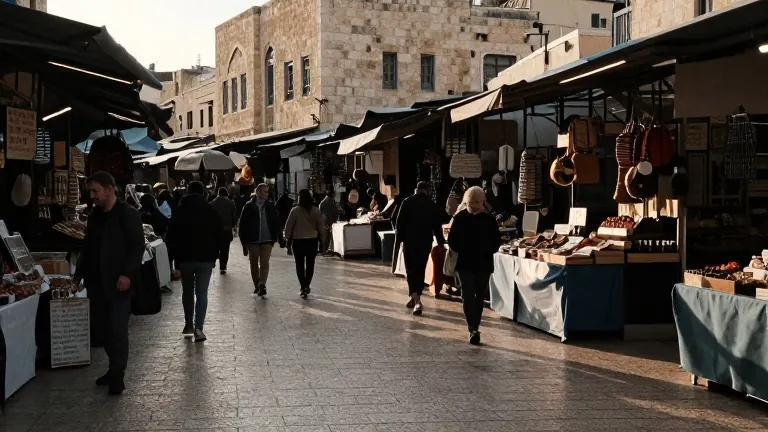
Resident sentiment in Jerusalem is divided as voters prepare to cast ballots in the 26th Knesset election.
A recent Maariv poll released Friday shows the opposition bloc leading the coalition by six seats. The gap exists despite the two largest parties being separated by only two seats in the current standings. The data suggests that shifts between right-wing parties will determine if the governing bloc reaches the 61-seat threshold needed to form a government. Nationally, 60% of Israelis favor a unity government if the election yields no clear winner.
Voters interviewed at Shuk Mahane Yehuda and Ben Yehuda Street expressed deep loyalty to Prime Minister Benjamin Netanyahu, citing his alliance with the United States. One male resident stated that he views Netanyahu as a great ally to America and that American support mirrors his own policies. Another woman in Nachlaot admitted to loving Netanyahu but said she relies on her husband to navigate the political details. She specifically sought a government that supports Torah learning and lowers consumer prices. These comments reflect a segment of the electorate that prioritizes established relationships and religious alignment over partisan shifts.
Other residents expressed frustration with the current leadership and leaned toward rival right-wing figures. A man in Mahane Yehuda said he would vote for a party outside the current government because he dislikes the administration's attitude. A supporter of former Prime Minister Naftali Bennett in the city praised his team for caring about the country rather than pursuing populism or personal wealth. She noted that Bennett's allies aim to create good rules for Israel. Another woman in Mahane Yehuda simply stated that she does not want Netanyahu, referring to him by his nickname Bibi, and is leaning toward Bennett.
Security remains a dominant factor in voter decision-making. Two residents cited their faith in Finance Minister Bezalel Smotrich, with one noting his connection to the Religious Zionist community and the other highlighting the concept of bitachon, or security. A man in Mahane Yehuda voted for National Security Minister Itamar Ben-Gvir specifically for these reasons. Many interviewees mentioned that their rabbis advise them to keep their voting choices private. The polling data indicates that 81% of Israelis are certain they will vote, a figure that suggests turnout may exceed the 71% recorded in the 2022 election.
The 2022 election results provide a baseline for the current race. Likud received approximately 23% of the vote, Yesh Atid took 17.79%, and the Religious Zionist Party secured 10.84%. Current polling suggests the coalition has weakened by three seats compared to the previous week. Voters in Jerusalem continue to weigh religious values against security concerns as they finalize their ballots for Tuesday's vote.
Source: The Jerusalem Post