Lula Secures Victory in Brazil Runoff Against Flávio Bolsonaro
The 80-year-old leader reversed a first-round loss to win his fourth presidential term, defying a regional trend toward right-wing governance.
By Elena Menon ·

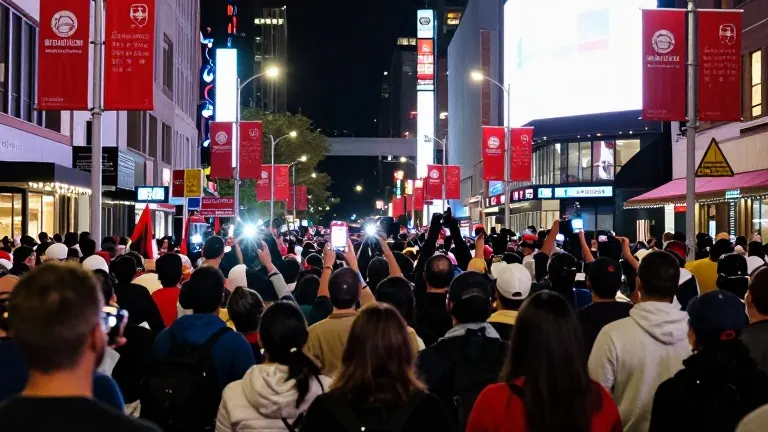
Brazilian voters chose Luiz Inácio Lula da Silva as their president on Sunday, ending a three-week campaign that saw him overturn a first-round deficit. He defeated Flávio Bolsonaro, the son of former leader Jair Bolsonaro, in the final round. The outcome counters a pattern in Latin America where right-wing candidates with policies similar to those of U.S. President Donald Trump have recently taken power.
Lula is 80 years old and will turn 81 on Tuesday. He first won the presidency in 2002 after three previous attempts, becoming Brazil's first leftist head of state in nearly 50 years. Born to a poor peasant family, he learned to read at age 10 and worked as a shoe-shine boy and peanut seller. He trained as a metalworker and lost the little finger of his left hand in an accident in the 1960s. Trade union activism led him to politics, and he was elected head of the 100,000-member Metalworkers' Union in 1975. In 1980, he co-founded the Workers' Party, which shifted from revolutionary goals to a social democratic platform.
During his first two terms from 2003 to 2010, Lula invested billions of dollars in social programs. He raised the minimum wage above inflation and expanded the Bolsa Familia grant, which assisted approximately 44 million people. He left office with an 83% approval rating following the longest economic growth period in three decades. His political standing later declined due to a recession and the Operation Car Wash corruption probe. In 2017, he was convicted of accepting a beachside flat as a bribe from OAS, a sentence that was raised to 12 years on appeal. He was also sentenced to 12 years and 11 months for corruption linked to a country house. A Supreme Court ruling freed him in 2019, and his convictions were annulled in 2021, allowing him to defeat Jair Bolsonaro in 2022.
Lula stated in 2023 that his return would be his final term, but his party nominated him again for this cycle. Critics note he achieved more in his earlier administrations. Environmentalists have objected to his support for offshore oil drilling near the Amazon, though his government cites satellite data showing the lowest deforestation in the first half of 2026 in a decade. Lula maintains that oil revenue will fund the transition to clean energy.
Relations with the United States have fluctuated. Trump imposed 50% tariffs on Brazilian goods, citing the trial of Jair Bolsonaro, who is serving a 27-year sentence. Lula called this foreign interference and said, "he's not emperor of the world." After a May meeting where Trump described Lula as "dynamic," ties improved. The U.S. later imposed 25% tariffs on most Brazilian goods in July. Lula has stated that "Brazil does not fit into anyone's backyard."
Internationally, Lula has criticized the veto power held by the five permanent members of the UN Security Council, arguing it excludes nations like Brazil, Germany, India, and Japan. Brazil remains an active member of the Brics group, which includes Russia, India, China, and South Africa. Lula defends his economic ties with Russia and China, including continued purchases of Russian oil during the war in Ukraine.
Source: BBC News