Record spending and a Republican edge define the 2026 election
Republican committees have outspent Democrats on television, while individual Democratic candidates have raised more money, setting the stage for a costly and contested vote across the Southeast.
By Hassan Bello ·

Voters across the Southeast cast ballots on Tuesday, November 3, in what is shaping up to be the most expensive midterm election in American history. The sheer scale of financial investment reflects the high stakes of determining who controls Congress for the final two years of President Donald Trump's second term. In states like Georgia, Florida, North Carolina, South Carolina, Tennessee, Alabama, and Mississippi, the flow of campaign dollars has been intense. The Associated Press notes that the 2026 elections will likely set a new record for total spending, a trend driven by a fierce competition for control of both chambers of Congress.
A detailed analysis of advertising data reveals a distinct divergence in how the two parties are deploying their resources. Republican committees have outraised and outspent their Democratic counterparts at the committee level. This advantage has been bolstered by contributions from Trump-affiliated groups and prominent figures such as Elon Musk. However, at the candidate level, Democrats have managed to outraise their opponents. This split in spending patterns suggests a strategy where Republican committees focus on broad messaging, while Democratic candidates rely on direct fundraising to support their specific races.
The distribution of this money has been heavily influenced by the 2024 presidential results. According to the Associated Press analysis of AdImpact data, 88.1 percent of Republican general election television advertising spending went to states and districts that Donald Trump won in the last presidential election. Within that figure, more than 850 million dollars was spent in areas where the president won by ten points or more. This concentration of resources indicates a Republican strategy to consolidate support in areas that already favored the White House, aiming to protect the party's existing seats and ensure a strong turnout among their base.
In the Senate, 35 seats are up for grabs, with the outcome potentially shifting control of the upper chamber. Republicans currently hold 53 seats, while Democrats hold 45, plus two independents who caucus with the Democrats. For Democrats to gain a majority, they need a net gain of four seats. Republicans can afford to lose only two seats to maintain their majority. In the Southeast, several key Senate races are underway. In Georgia, incumbent Democratic Senator Jon Ossoff faces Republican Representative Mike Collins. In North Carolina, Democratic former Governor Roy Cooper challenges former Republican National Committee chair Michael Whatley for the seat of retiring Senator Thom Tillis.
Other significant Senate contests in the region include races in South Carolina, where incumbent Republican Senator Darline Graham is running for re-election, and in Tennessee, where incumbent Republican Senator Bill Hagerty is on the ballot. In Alabama, the Senate seat is open, adding to the competitive nature of the race in a state that has seen significant shifts in recent years. The outcome in these states will be critical in determining whether the Senate remains in Republican hands or shifts to Democratic control, a change that would have profound implications for legislation and judicial confirmations.
Governor races are also a major focus, with 36 governorships on the ballot nationwide. Republicans hold 26 governorships, and Democrats hold 24. In the Southeast, several open seats and competitive races are drawing significant attention. In Georgia, Republican health care executive Rick Jackson is running against Democratic former Atlanta Mayor Keisha Lance Bottoms to succeed term-limited Governor Brian Kemp. In Florida, the governor's race is open, with no incumbent on the ballot, making it a key target for both parties seeking to maintain or gain a majority of governorships.
The mood among voters is shaped by economic concerns and a desire for change or continuity, depending on their political alignment. The Associated Press describes the election as a referendum on Trump's second term, with many voters struggling with high prices. Polling data indicates that a significant portion of the public believes the country is heading in the wrong direction, with many blaming the administration for economic strains. In Florida, voter Mark Barker of Palm Beach Gardens expressed support for the president, while in North Carolina, librarian James Moore cited rising costs in taxes and healthcare as primary concerns.
Turnout remains a central factor in this election, as highlighted by RNC Chairman Joe Gruters, who stated that everything depends on voter participation. The early vote has already surpassed levels from four years ago in many states, with more than 57 million people having voted by Monday. This high level of engagement suggests that the final result will be closely watched, with even small shifts in turnout potentially determining the control of the House and Senate. The U.S. Postal Service has added resources to ensure mail ballots are counted on time, reflecting the importance of every vote in this closely contested election.
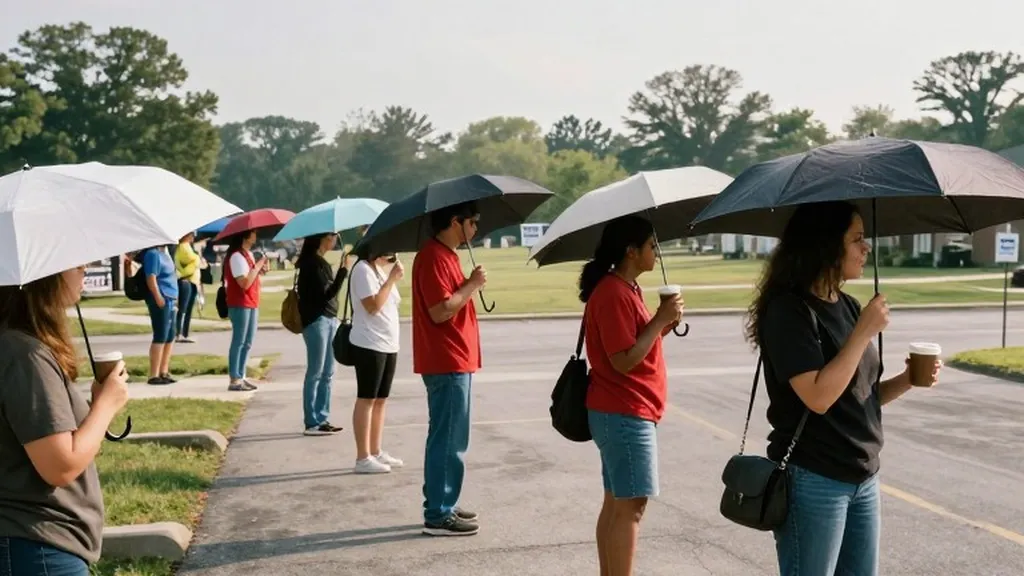
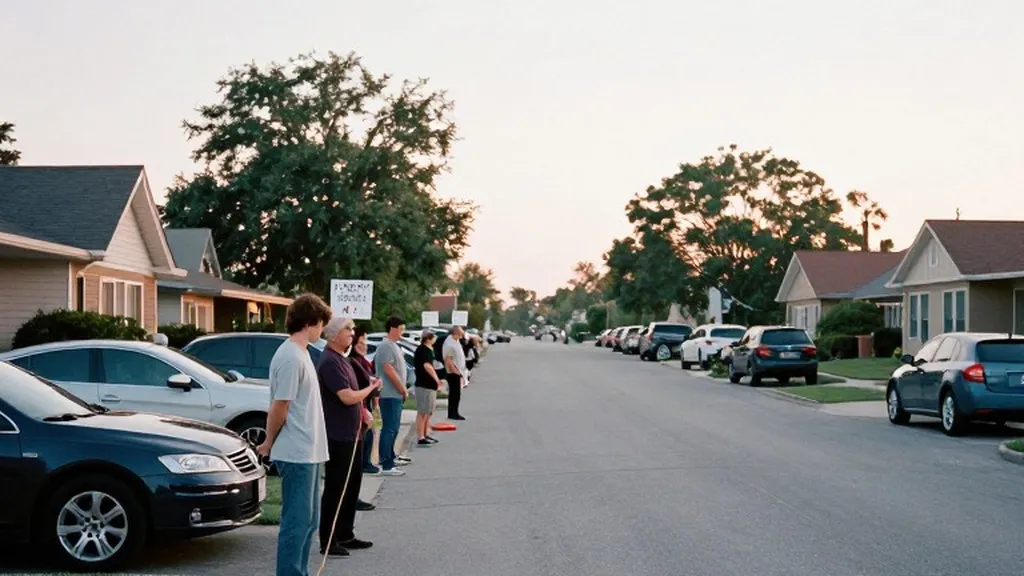
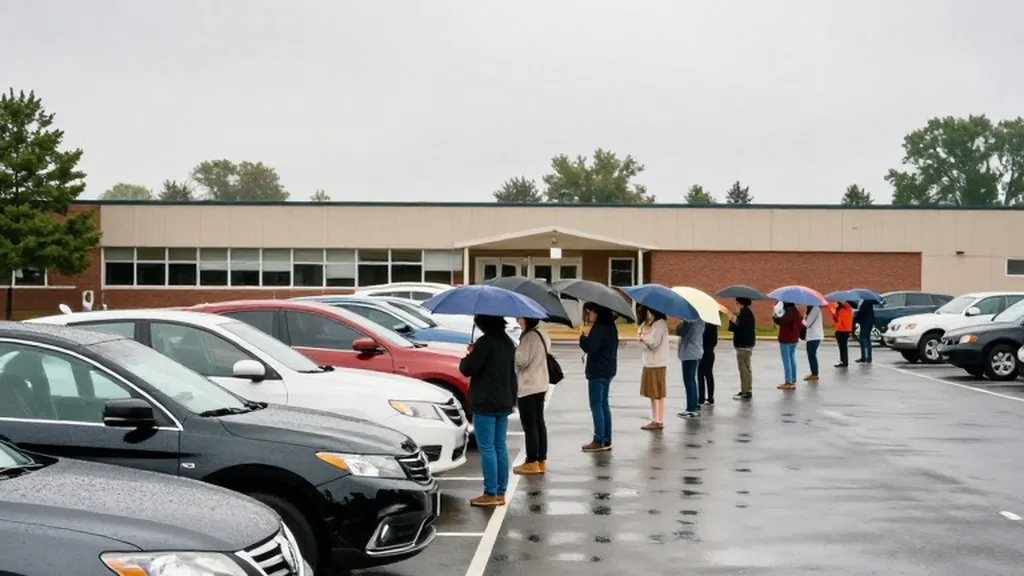
As polls open in the morning hours, from 7 a.m. in Georgia and Florida to 6:30 a.m. in North Carolina, voters are heading to the polls to decide the balance of power in Washington. The results of this election will set the tone for the remainder of the current presidential term and influence the political landscape for the 2028 cycle. With the financial stakes at an all-time high and the political stakes equally significant, the outcome of Tuesday's vote will be a defining moment for American politics in the coming years.
The election also has implications beyond domestic politics, with Wall Street watching for signals on fiscal policy and debt ceiling negotiations. The outcome could impact investor confidence in areas such as artificial intelligence spending and broader economic stability. As the votes are counted, the focus will be on whether the Republican edge in committee spending and the Democratic edge in candidate fundraising will translate into a shift in power or a maintenance of the status quo in Congress.