Defying the Midterm Curse: How Both Parties Aim to Beat History
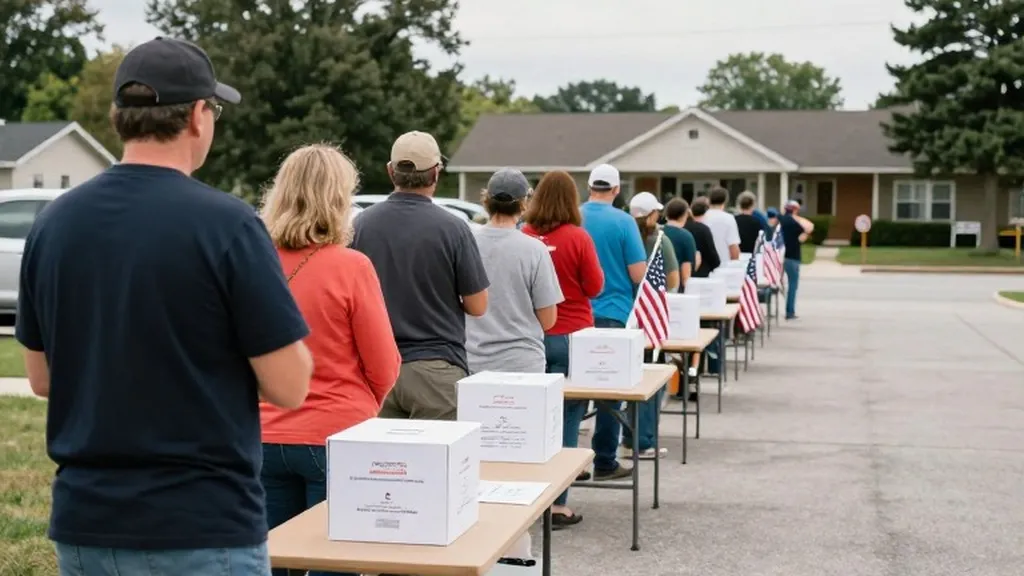
With polls open across the Southeast, both parties employ distinct strategies to defy the historical trend of the president's party losing seats in midterm elections.
By Alessia Diallo ·
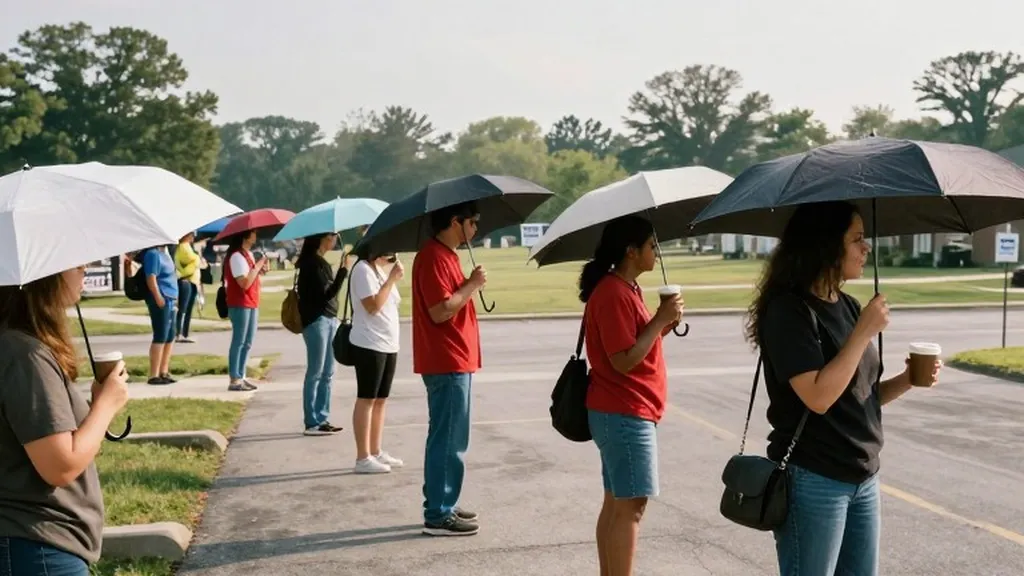
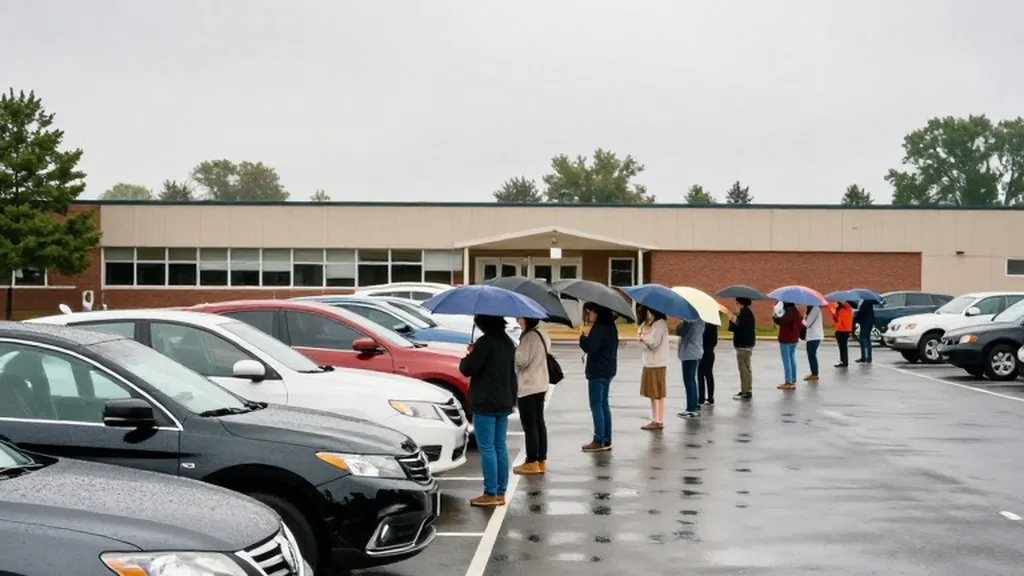
The midterm election cycle has long been defined by a consistent historical pattern: the president's party almost always loses seats in Congress. Today, as voters head to polling places across the Southeast, the political landscape is shaped by this expectation. Republicans currently hold a majority in both chambers, but the Associated Press notes that the party is bracing for potential losses in the House. With all 435 House seats up for grabs, Democrats need a net gain of three districts to seize control, while Republicans can afford to lose no more than two seats. This narrow margin has intensified the focus on turnout and local mobilization efforts in key battleground states.
In the Senate, the stakes are equally high, with 35 seats on the ballot. Republicans hold 53 seats and can lose only two to maintain their majority. Democrats need a net gain of four seats to take control. The Associated Press reports that one or two seats could tip the balance in either chamber, making every vote critical. In the Southeast, several Senate races are closely watched. In Georgia, polls are open from 7 a.m. to 7 p.m., with incumbent Democrat Jon Ossoff facing Republican Representative Mike Collins. The state voted for President Trump by a margin of 2.2 points in 2024, making the race highly competitive. In North Carolina, polls open at 6:30 a.m. and close at 7:30 p.m. for the open seat previously held by Thom Tillis, who retired after clashing with the president. Former Governor Roy Cooper is challenging former RNC chair Michael Whatley in a state that Trump won by 3.3 points in 2024.
Florida presents a unique scenario with no regular Senate race, but the governor's office is a key target. Polls in the state are open from 7 a.m. to 7 p.m. The Associated Press identifies Florida as a competitive governor race, where the outcome could signal broader trends in the South. In South Carolina, polls are open from 7 a.m. to 7 p.m., featuring an open governor's seat and a Senate race where incumbent Darline Graham is on the ballot. In Tennessee, poll hours vary by county, and the state has an open Senate seat and an open governor's race. The Associated Press notes that new congressional maps in states like Florida, North Carolina, and Tennessee may not vote exactly as drawn, adding a layer of uncertainty to the redistricting strategies employed by both parties.
Alabama and Mississippi also hold critical races today. In Alabama, polls are open from 7 a.m. to 7 p.m., with both the Senate and governor's offices up for grabs. In Mississippi, polls are open from 7 a.m. to 7 p.m., featuring incumbent Cindy Hyde-Smith in the Senate race and no governor's race. The Associated Press notes that President Trump held rallies in Mississippi and South Carolina as part of his schedule to boost Republican candidates. His message in Salina, Kansas, where he ended his recent rally circuit, was to pretend he was on the ballot, reflecting the personal nature of the referendum on his second term. Many Republican candidates, however, have kept some distance from the president to appeal to moderate voters, a strategy aimed at mitigating the historical penalty for the president's party.
The economic mood is a central theme in this election. According to AP-NORC polling, 35 percent of U.S. adults approve of Trump's job performance, while only 25 percent approve of his handling of the economy. About seven in ten voters say the country is heading in the wrong direction, with high prices being a primary concern. In Raleigh, North Carolina, voter James Moore, a 57-year-old librarian, expressed frustration with rising costs, stating that he is paying more for taxes, healthcare, and everything else. This sentiment is echoed in other Southern states, where the cost of living has become a defining issue. The Associated Press describes the election as a referendum on the president's second term, with voters struggling with high prices and an unpopular war with Iran.
Money has played a significant role in shaping the campaign. The 2026 elections are likely to be the most expensive in history. Republican committees outraised and outspent Democratic committees, aided by Trump-affiliated groups and Elon Musk. However, at the candidate level, Democrats outraised their opponents. An AP analysis of AdImpact data shows that 88.1 percent of Republican general election TV ad spending went to states and districts Trump won in 2024. This heavy spending in safe Republican areas suggests a strategy to protect the base and ensure high turnout among loyal voters. In contrast, Democrats focused their resources on competitive districts and states, aiming to flip key seats and capitalize on national sentiment.
Turnout remains the decisive factor. RNC Chairman Joe Gruters emphasized that everything depends on turnout, stating that if they turn out their voters, they win. This focus on mobilization is evident in the Southeast, where local parties have invested heavily in get-out-the-vote efforts. The Associated Press notes that more than 57 million people had already voted as of Monday, surpassing the early vote of four years ago in many closely watched states. This high level of early voting suggests that the final outcome will be closely tied to the final turnout numbers on Election Day. In states like Georgia and North Carolina, where margins are thin, every vote counts.