Russia Opens Third Moscow-Africa Summit Amidst $27 Billion Trade Gap
Despite hosting leaders from the continent, Russia’s 2025 trade with Africa remains under 4% of its total foreign commerce, lagging far behind European and Asian rivals.
By Alessia Diallo ·
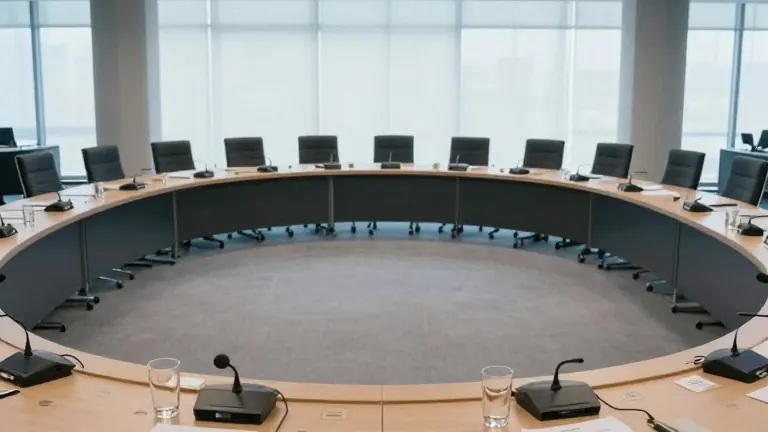
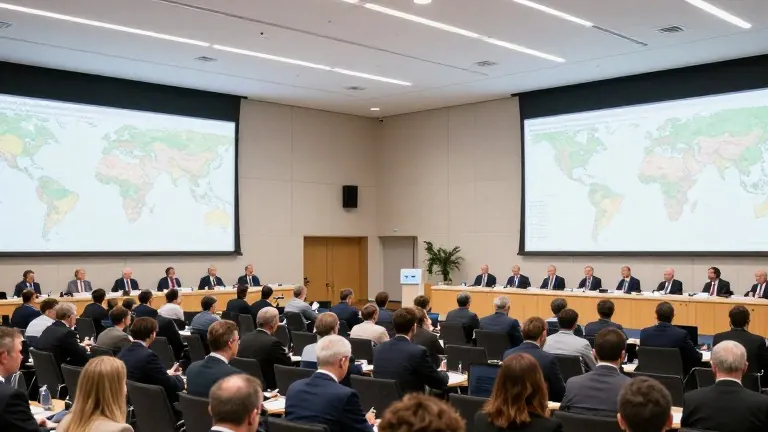
Russia began its third Moscow-Africa summit on October 28, gathering African leaders in the Kremlin’s bid to cultivate economic and political allies outside the Western sphere. The event follows a full-scale invasion of Ukraine that prompted Moscow to seek new partnerships. Foreign Minister Sergei Lavrov has increased his visits to the continent, while Foreign Ministry spokesperson Maria Zakharova described the diplomatic effort as a historic return to the region.
The summit takes place on a three-year cycle that began in 2019. While sessions address politics, security, science, and culture, the primary focus is economic cooperation. However, data suggests Russia’s commercial footprint is concentrated in a limited number of states, primarily in North Africa, rather than being spread across the continent's 54 nations.
Egypt serves as the most prominent case study for Russian economic engagement. According to the Federal Customs Service, bilateral trade between the two nations reached $10.5 billion in 2025. This figure is more than double the level recorded in 2021. Russian exports to Egypt are driven mainly by grain and metal products, while Egyptian exports to Russia consist largely of fruit and vegetables. A major infrastructure project, a nuclear power plant at El-Dabaa on the Mediterranean coast, is currently under construction. A $25 billion Russian loan covers approximately 85% of the project's costs.
Nikita Smagin, an expert on Russian policy in the Middle East, views Egypt as a potential gateway for Moscow to reach other markets. He noted that Cairo pursues its own interests, making political solidarity alone an insufficient basis for long-term support. Ivan Klyszcz of the International Centre for Defence and Security in Tallinn identified Algeria as another key partner. He added that attempts to deepen ties with Tanzania and Ethiopia have not yet yielded substantial results.
Total trade between Russia and all 54 African countries amounted to roughly $27 billion in 2025. Egypt accounted for 39% of that total. Africa represented only 3.9% of Russia's overall foreign trade. In comparison, the European Union traded approximately $385 billion with the continent in 2025. China's trade volume exceeded $348 billion, while the United States and India recorded figures of nearly $105 billion and $103 billion, respectively. Fidel Owusu, an analyst, stated that middle powers like Turkey and the United Arab Emirates are outperforming Russia in regional trade.
Russia’s military presence in Africa has expanded since the war in Ukraine. The Wagner Group and the defense ministry-controlled Africa Corps have provided support to governments in unstable Sahel states. Affiliated companies have gained access to raw materials in these regions. The Congressional Research Service reports that the largest Russian military contingents, numbering several thousand troops each, are stationed in the Central African Republic, Mali, and Libya. Russian fighters have also been observed in Equatorial Guinea.
Irina Filatova of the University of Cape Town cited mineral deposits, influence over Europe's southern borders, and Libya's logistical role for landlocked states as factors in Russian strategy. In the arms market, Russia remains a major supplier. The Stockholm International Peace Research Institute estimates Russia's share of the African arms market for 2021 to 2025 at 15%. This places Russia third, behind the United States at 19% and China at 17%. Russia held the top position with a 21% share from 2020 to 2024.
Diplomatic votes in the United Nations General Assembly are a central objective for Moscow. Owusu noted that Africa's large membership influences voting outcomes, where Russia has recently performed better than in previous years. President Vladimir Putin told the Valdai Discussion Club that Russia aims to develop together with Africa, distinguishing this approach from colonial powers. Filatova observed that the Russian narrative is received positively in South Africa, while anti-colonial sentiment elsewhere does not automatically translate into support for Moscow.
The summit will continue through October 29. Russian officials plan to finalize agreements on critical minerals and energy projects, including lithium in Mali and nuclear initiatives. Beverly Ochieng of Control Risks expects Russia to compete more aggressively in these sectors during the sessions.
Source: Deutsche Welle