Saudi defense chief arrives in Tehran for Mecca pact talks
The trilateral alliance signed in August faces its first practical test as leaders from Turkey and Pakistan join the Saudi delegation in Iran.
By Alessia Diallo ·
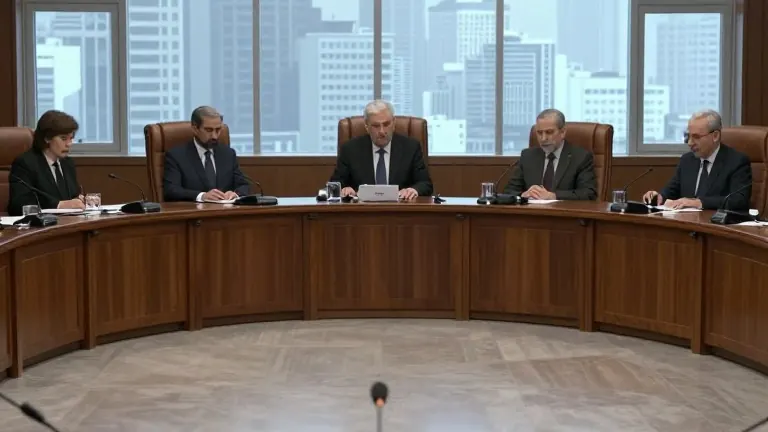
Khalid bin Salman, the Saudi Defense Minister, landed in Tehran on October 26 to open formal talks with Iran. His arrival marks the first high-level engagement between the signatories of the Mecca Joint Defense Agreement and the Persian state since the conflict escalated. The meeting aims to ease regional tensions through direct dialogue rather than further military action.
The pact, signed in August 2026, binds Saudi Arabia, Turkey, and Pakistan in a collective defense arrangement. The document states that an armed attack on one member counts as an attack on all three. It also mandates joint military exercises, intelligence sharing, and cooperation on defense technology. Turkey published the full text in October as it moved toward parliamentary ratification of the alliance.
Before the current crisis, questions lingered about the pact's effectiveness. Houthi attacks on Saudi territory had prompted debate over whether Ankara and Islamabad would rush to Riyadh's aid. Critics argued the agreement lacked immediate operational teeth. The current talks in Tehran serve as a practical test of whether the three nations can produce concrete diplomatic outcomes.
High-ranking officials from the other two member states are also in Iran. Field Marshal Asim Munir, the army chief of Pakistan, and Ibrahim Kalin, the head of Turkish Intelligence, arrived alongside the Saudi delegation. Munir has visited Tehran recently, signaling a sustained channel of communication between the two militaries.
Iran’s Foreign Ministry Spokesperson Esmaeil Baghaei described the hosting of these senior figures as a key step toward regional diplomacy. He stated on October 26 that such cooperation could help achieve lasting stability in the Middle East. Baghaei argued that the region must handle its own problems collaboratively, a view that aligns with Iran's preference to limit external military intervention.
The diplomatic effort coincides with ongoing statements from the United States and Israel. Both nations have publicly declared that the war with Iran will continue. President Donald Trump has twice endorsed Israeli Prime Minister Benjamin Netanyahu, suggesting a specific leadership continuity is necessary for the fight against Tehran. This stance contrasts with the view among many Israelis that the US-Israel partnership extends beyond individual leaders.
Analysts note that the Mecca pact mirrors the structure of NATO more in form than in immediate combat readiness. NATO, founded in 1949, has historically focused on training, shared operations, and political consensus among Western democracies rather than frequent joint warfare. The Saudi, Turkish, and Pakistani leaders appear to be prioritizing pragmatic consensus-building over immediate battlefield coordination.
In Riyadh, Saudi Arabia’s Deputy Minister for Public Diplomacy, Dr. Rayed Krimly, confirmed the delegation's mission. He said the talks with Iranian President Masoud Pezeshkian and Supreme National Security Council Secretary-General Mohsen Rezaei are part of ongoing efforts to de-escalate the situation. The Kingdom views these meetings as a step toward encouraging dialogue and diplomatic solutions to the current conflict.
Source: The Jerusalem Post