Lula Claims Fourth Term in Brazil After Late Voting Surge
The incumbent president secured 64.2 million votes to defeat Flávio Bolsonaro, triggering immediate legal challenges over extended polling hours.
By Hassan Bello ·
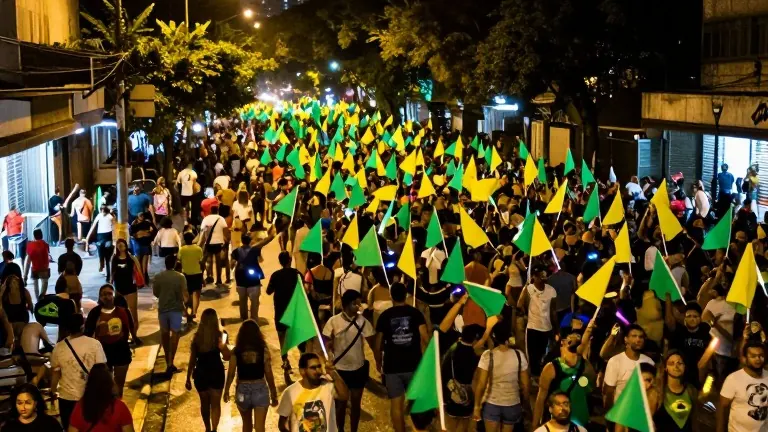
Luiz Inácio Lula da Silva secured a fourth term as president of Brazil on Sunday, defeating challenger Flávio Bolsonaro with 64.2 million votes. The incumbent leader captured 51.79 percent of the total vote, while the former president’s son received 59.8 million votes, or 48.21 percent. The victory margin exceeded four million ballots, marking a decisive shift from the first round held on October 4.
The outcome reversed the initial polling data that had placed Flávio Bolsonaro ahead by two points. Opinion polls never showed Lula leading in the second round predictions, nor did they forecast a final gap of nearly four percentage points. That final margin surpassed the difference Lula achieved against Jair Bolsonaro in the 2022 election. The result followed a period where right-wing parties gained control in legislative elections, a scenario analysts viewed as unfavorable for the incumbent.
Flávio Bolsonaro rejected the result immediately after counts were finalized. He announced he would petition the courts to annul the election, citing a judicial order that extended voting hours by two hours nationwide. The extension was ordered by Supreme Court Justice Cristiano Zanin, who previously served as Lula’s lawyer. The order was issued one minute after the standard closing time, causing confusion at many polling stations. Kassio Nunes Marques, president of the Superior Electoral Court, stated the delay created technical, operational, and security difficulties.
The Workers' Party argued that the extension benefited their base. Party officials claimed that right-leaning city administrations failed to provide sufficient free bus services mandated by the court, a measure designed to help poorer voters who typically support the left. Flávio Bolsonaro described the situation as a total violation of equality, stating in a press release in Brasília that the rules were changed by Lula’s allies in the Supreme Court. Despite these claims, Hugo Motta and Davi Alcolumbre, the leaders of the lower and upper houses of Congress, accepted the victory.
In his victory speech, Lula thanked young voters for taking to the streets to protect democracy and older citizens for reducing the high abstention rates seen in the first round. He positioned the campaign as a defense against authoritarianism and foreign influence, specifically citing the influence of US President Donald Trump. Lula asserted that Brazil refused to be a backyard to other nations and sought a central role in global discussions. He was set to take office on Monday, facing a Congress with the highest concentration of right-wing members in its history.
Source: Latin Opinion