Tesla’s Humanoid Push Stalls: Why the Hand Is the Hardest Part
Elon Musk has pushed the start of external Optimus deliveries to late 2027, citing persistent challenges with the robot's dexterity and long-term durability.
By Elena Menon ·
The timeline for Tesla’s humanoid robot has shifted again, with external deliveries now targeted for late 2027.
During the company’s Q3 2026 earnings call, CEO Elon Musk acknowledged that significant hurdles remain before the Optimus robot can be reliably sold to outside customers. He identified the robot's hands, its overall durability, and its artificial intelligence as the primary areas requiring further development. This delay marks the latest adjustment in a timeline that has consistently slipped since the project’s inception, moving from initial internal use plans in 2025 to high-volume external production now slated for the end of next year.
The production infrastructure is already in place, yet scaling remains a challenge. Tesla has installed most of the equipment necessary for a line capable of producing a million robots annually at its Fremont facility, where Model S and Model X were previously built. However, Musk indicated that reaching a rate of approximately 20,000 units per week will take at least a year, possibly longer. This extended timeline is attributed to ongoing changes in the design, particularly in components that are difficult to finalize. Early production has begun, and the company now considers the units coming off this line to be the first of production quality, a distinction that implies previous prototypes did not meet this standard.
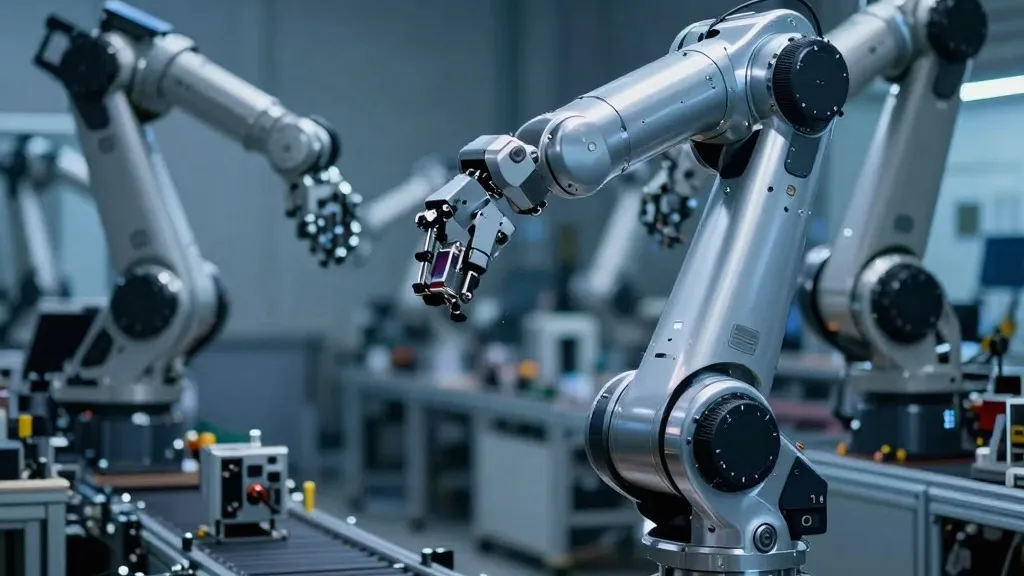
The mechanical complexity of the robot’s hands is cited as the most difficult engineering problem to solve. An Optimus engineer noted that the hand is one of the hardest hardware areas, alongside custom gears that raise reliability concerns. Musk explained that the fingers must be soft enough to handle delicate objects yet robust enough to withstand constant wear, a challenge compounded by the fact that robots cannot heal like human skin. This issue is compounded by the fact that the hand and forearm contain over 100 small parts that are currently assembled by hand, with touch sensors facing their own reliability issues.
On the software front, Tesla faces a data scarcity problem. Unlike its fleet of cars, which continuously collects data for Full Self-Driving, Tesla does not yet have a large fleet of robots to generate training data. To address this, the company plans to build 10,000 to 20,000 robots and utilize an "Optimus Academy" where they will practice tasks to improve their AI architecture. The AI5 chip is expected to be integrated into the robots around April 2027. Musk also promised a video within one or two months showing the robot performing unscripted tasks, arguing that many current demonstrations rely on pre-programmed routines that fail in real-world conditions.
Competitors are making parallel progress, challenging Tesla’s claim that no other company is close. XPeng activated an automated production line for its IRON robot in September, with plans for mass production by the end of 2026 and deliveries in the first half of 2027. Similarly, Boston Dynamics began producing its electric Atlas in January and has committed all its 2026 deployments, including to Google DeepMind. While Tesla focuses on general-purpose dexterity, Boston Dynamics has adopted a more pragmatic approach by prioritizing sturdy grippers for industrial parts, effectively bypassing the hand-dexterity bottleneck that Tesla is currently navigating.
Source: Electrek · original report published